
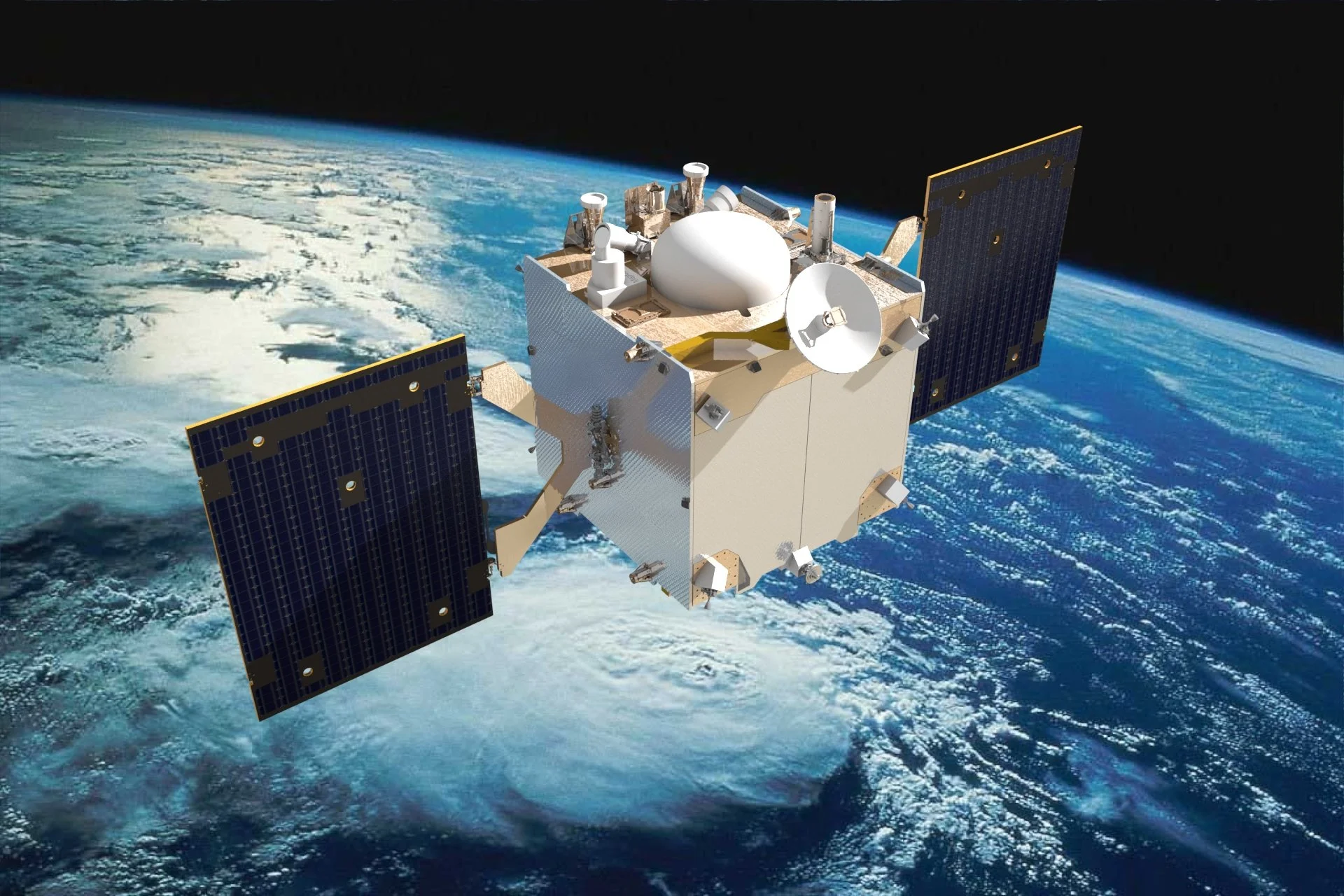
TIRI
(Thermal InfraRed Imager)
Thermal Infra Red Imager
TIRI is a contribution by ISAS and the JAXA (Japan eXploration Agency), manufactured by MEC. Investigation of thermo-physical properties of Apophis, especially thermal inertia, and distribution of materials.
Parameters
| Detector | Lyndred PICO1024 Gen2 |
|
Wavelength |
7-14μm
|
| Number if pixels | 1024(H) x 768 (V) |
| Pixel size | 17μm |
| Detection area size |
17.5 x 13.1mm |
| Absolute temp accuracy | ~3K |
| Temperature range |
150 ~ 450K |
|
Field of view (FOV) |
13.3x10.0 |
|
Angular Resolution (IFOV) |
0.023 mrad (0.013°/pixel) |
|
Main body size |
150 x 180 x 230mm |
| Mass | 4.2 kg ≤ 5.5 kg (with system margin) |
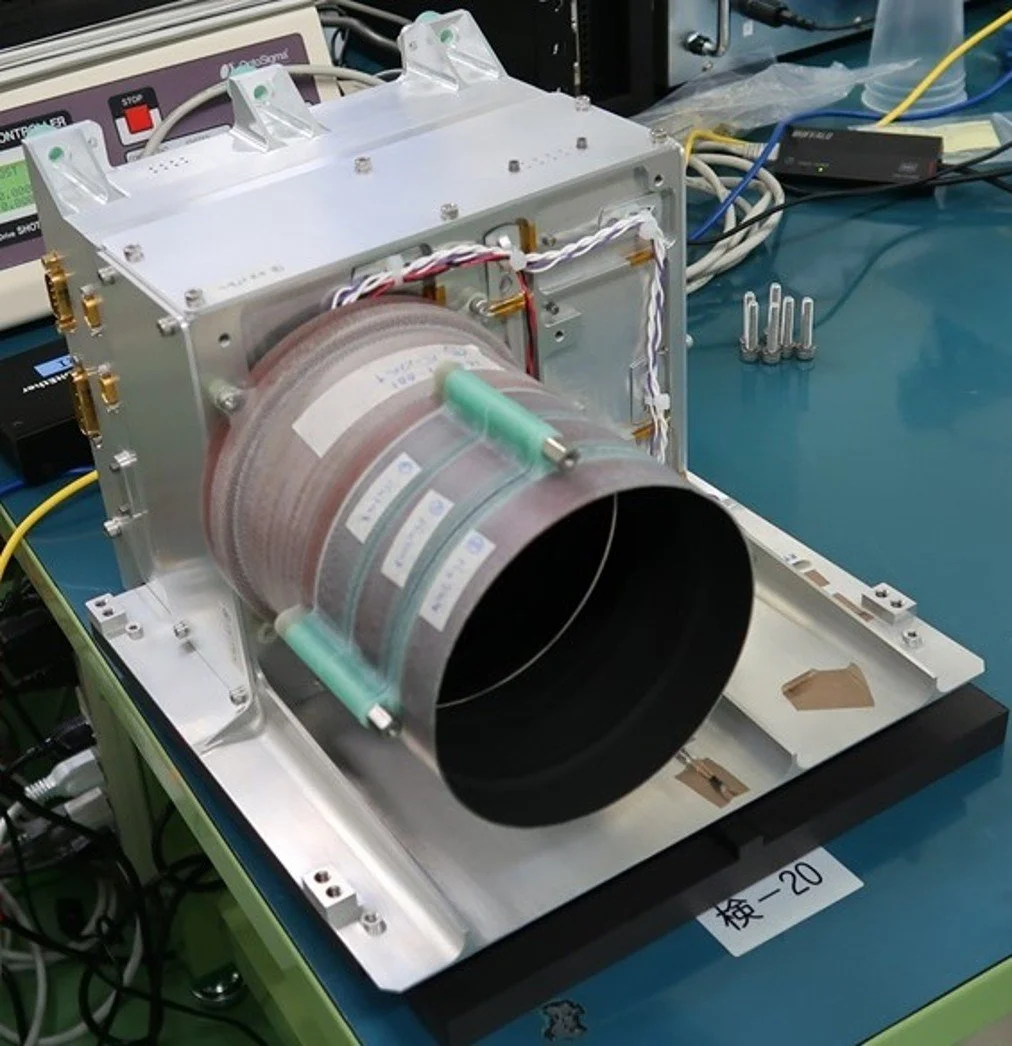
Credits: JAXA/ISAS/MEC
Hamlet
(Hyperscout for Apophis Multispectral Exploration and Taxonomy)
Hyperspectral Imager
For the global hyperspectral mapping of the asteroid, based on Hera’s Hyperscout-H. Observing in 45 visible and near-infrared spectral bands, the HyperScout hyperspectral imager is developed by Cosine Research and INAF-IAP in Italy and will contribute to the geological and compositional investigation of the asteroid. It will facilitate the identification and quantification of silicate minerals (modal abundances of olivine, orthopyroxene, & clinopyroxene, their Fe, Mg, and Ca content).
Parameters (NIR Channel)
| Field of View | 15.97°x9.85° |
| Focal Length | 41.25mm |
|
Pixel Pitch |
5.5μm |
| Spectral Range | 650-960nm |
Parameters (SWIR Channel)
| Field of View | 8.8°x7° |
| Focal Length | 42.308mm |
|
Pixel Size |
5μm |
| Spectral Range | 950-1500nm |
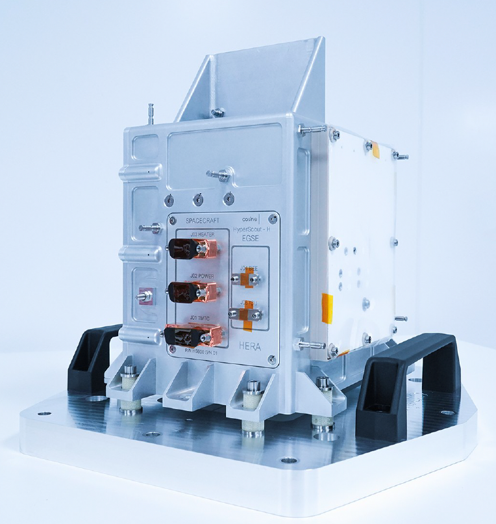
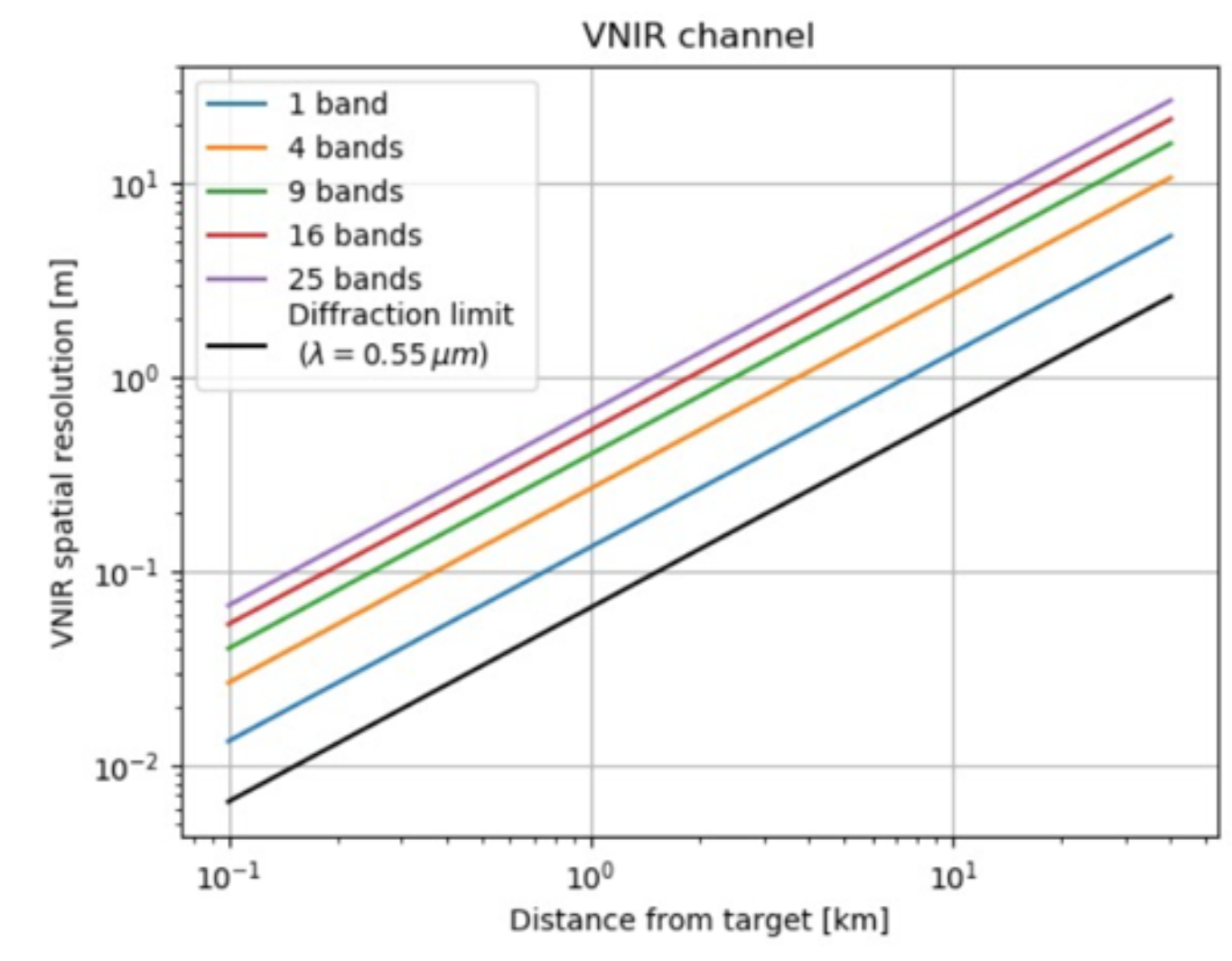
Credits: INAF IAP/Cosine Italy.
CHANCES
(Colour High-resolution Apophis Narrow-angle CamEra System)
Multispectral Imager
A Comet-I CoCa adaptation from Uni Bern (CH) and LAM (FR). Vis-NIR multispectral imaging system (~400 to ~1700 nm). High resolution images, i.e., ~1.5 cm at closest approach - covering the part of the near-Infrared spectrum and including the 1-μm absorption band and reflectance maximum at 1.6 μm for the unambiguous determination of the asteroid’s class and its possible change as it passes through Earth’s gravity field.
Parameters
| Telescope | Maksutov |
| Detector | 3D Plus, 3DCM830-1 SWIR Space Camera Head |
|
Main Structure |
Monolithic made of AIBeMet |
| E-Box | 2 PCBs: DPU and DCC+FTC |
|
DPU |
CaSSIS/CoCa heritage |
|
Mass Budget |
3kg (including maturity margin) |
| Envelope | 220 x 200 x 300mm³ |
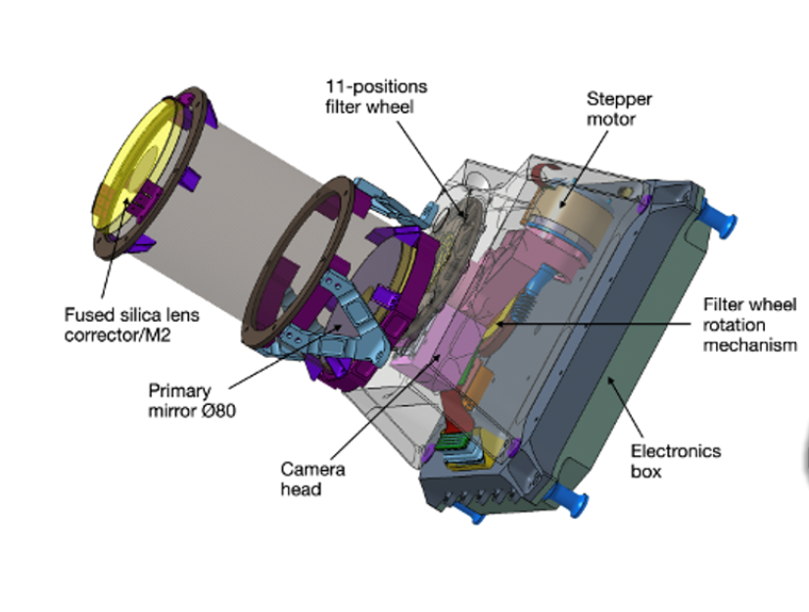
Credits: UniBern/LAM.
PALT-H
(Planetary ALTimeter)
Hera Rebuilt, Dual use as GNC sensor, Based on Jenoptik DLEM40 encapsulated with additional proximity electronics.
The Planetary ALTimeter (PALT) is a LIDAR experiment that determines the distance to the asteroids by measuring the time of flight of a laser beam at 1.5 μm wavelength with a footprint of 1 mrad (i.e. the diameter of the footprint is 10m at a distance of 10 km). The accuracy of the distance measurement is 0.5 m, the laser wavelength of 1.535 μm
PALT supports spacecraft navigation, from fly-by to landing operations, and provide scientific data, such as relative velocity, falling velocity and reflectance measurements at laser wavelength. It can support the development of the asteroid shape model and mass measurement (which allows an estimate of the bulk density) as well as the determination of the surface topography.
Parameters
| Laser pulse energy | 100 μJ |
| Pulse width | 2ns |
|
Emitter Optic Transmission |
.96 |
|
Receiver optics transmission |
.93 |
| Receiver telescope entrance aperture area. | 70 mm |
| Laser wavelength | 1535 nm |
| Working distance | 100m to 14 km |
|
Accuracy of distance measurement |
< 50 cm |
| Footprint | 1 mrad (1m from 1 km distance) |
| Optical Unit with baffle plus Electronics Box | 2.5 Kg |
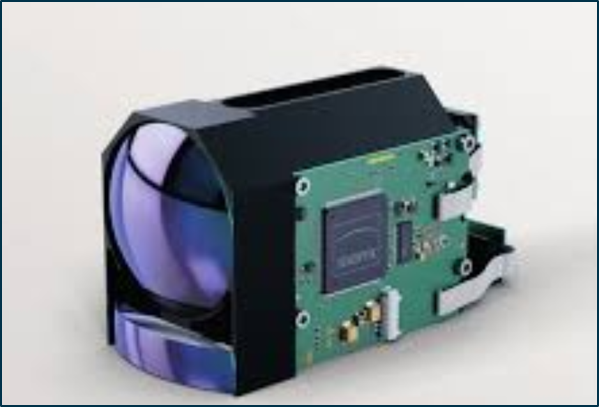
Credit: Jenoptik.
RPS
(Ramses Plasma Spectrometer)
RPS is a German contribution (supported by DLR) that will provide the first-ever detailed in-situ measurements of an asteroid’s plasma environment, offering key insights into its surface composition and weathering, plasma wake formation, and fundamental space plasma physics at kinetic scales.
Parameters
| Energy Range | 1 eV/e - 60 keV/e (ΔE/E < 10%) |
| Time Resolution | Adjustable, Best: 4.5 s |
|
Angular Coverage |
360° azimuth, up to 78° polar |
|
Angular Resolution |
22.5° azimuth, <10° polar |
| Species Detection | Electrons, Ions, Negative Ions |
| Instrument Status | Sensor & electronics fully developed/calibrated (in storage) |
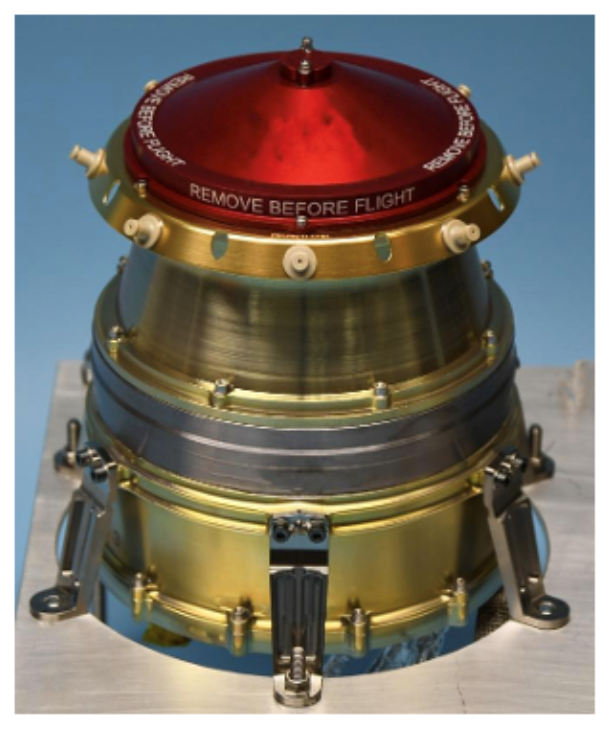
Credits: MPS/IRF.
Radio Science
The Ramses radio science experiment (RSE) will contribute to the determination of the binary system’s mass, gravity field and rotational state and orbits, through processing of Doppler and ranging measurements, as well as optical images. The experiment includes classical ground-based radiometric measurements between RAMSES and ground stations on Earth by means of a standard two-way X-band link, images of Apophis taken by the on-board camera(s), and satellite-to-satellite radiometric tracking between RAMSES and the Cubesats. The latter measurement, the so-called Inter-satellite link (ISL), represents a crucial add-on to the gravity estimation of low-gravity bodies by exploiting the proximity of the Cubesats to the asteroid, as the range-rate measurements carried out by the inter-satellite link contain important information.
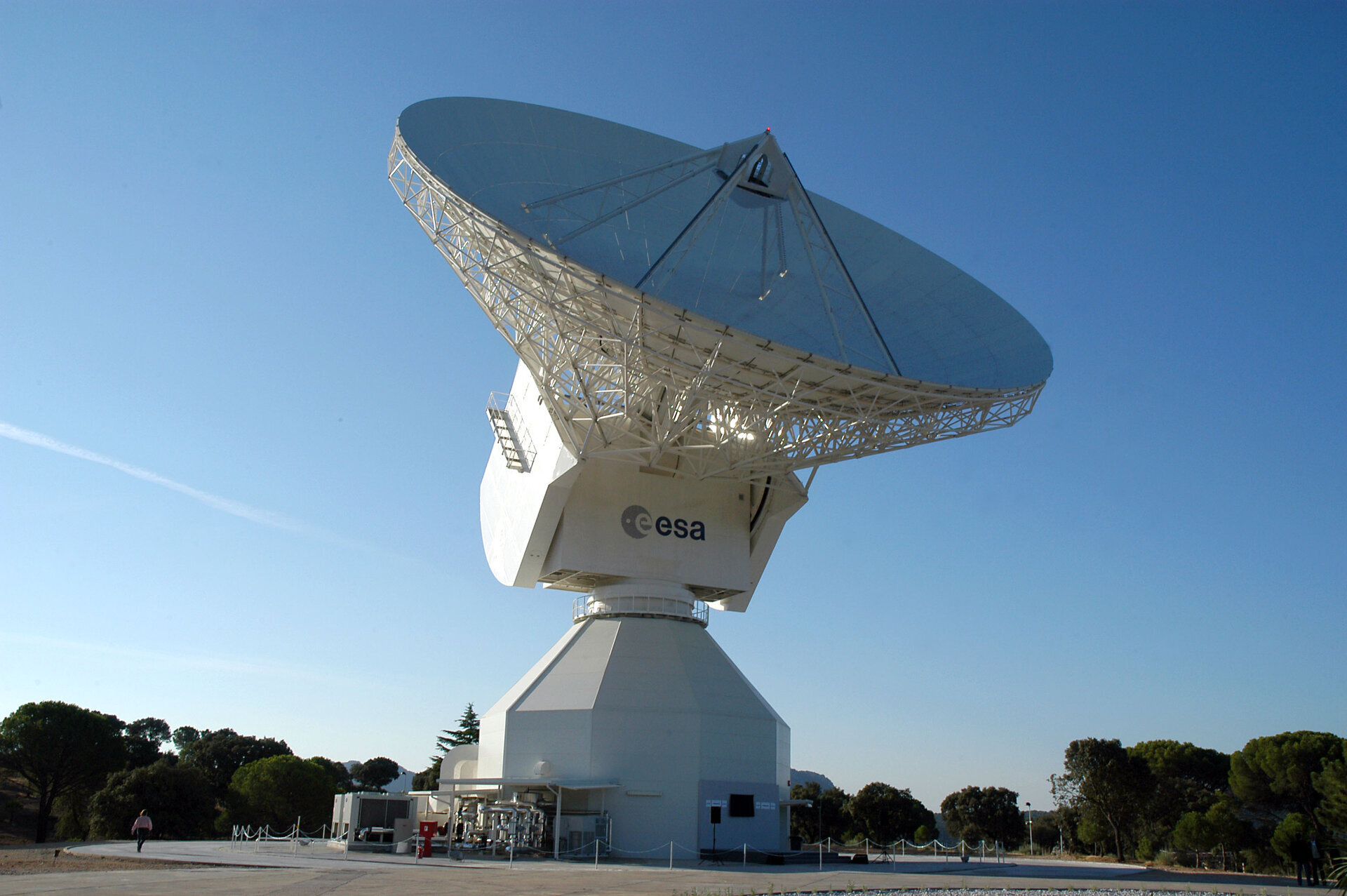
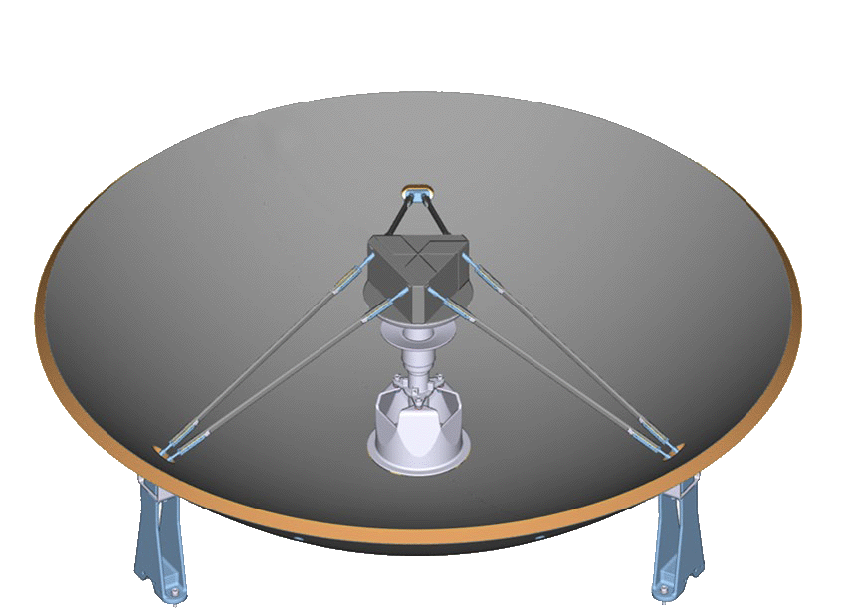
RAMSES High Gain Antenna