
Mission
Scenario
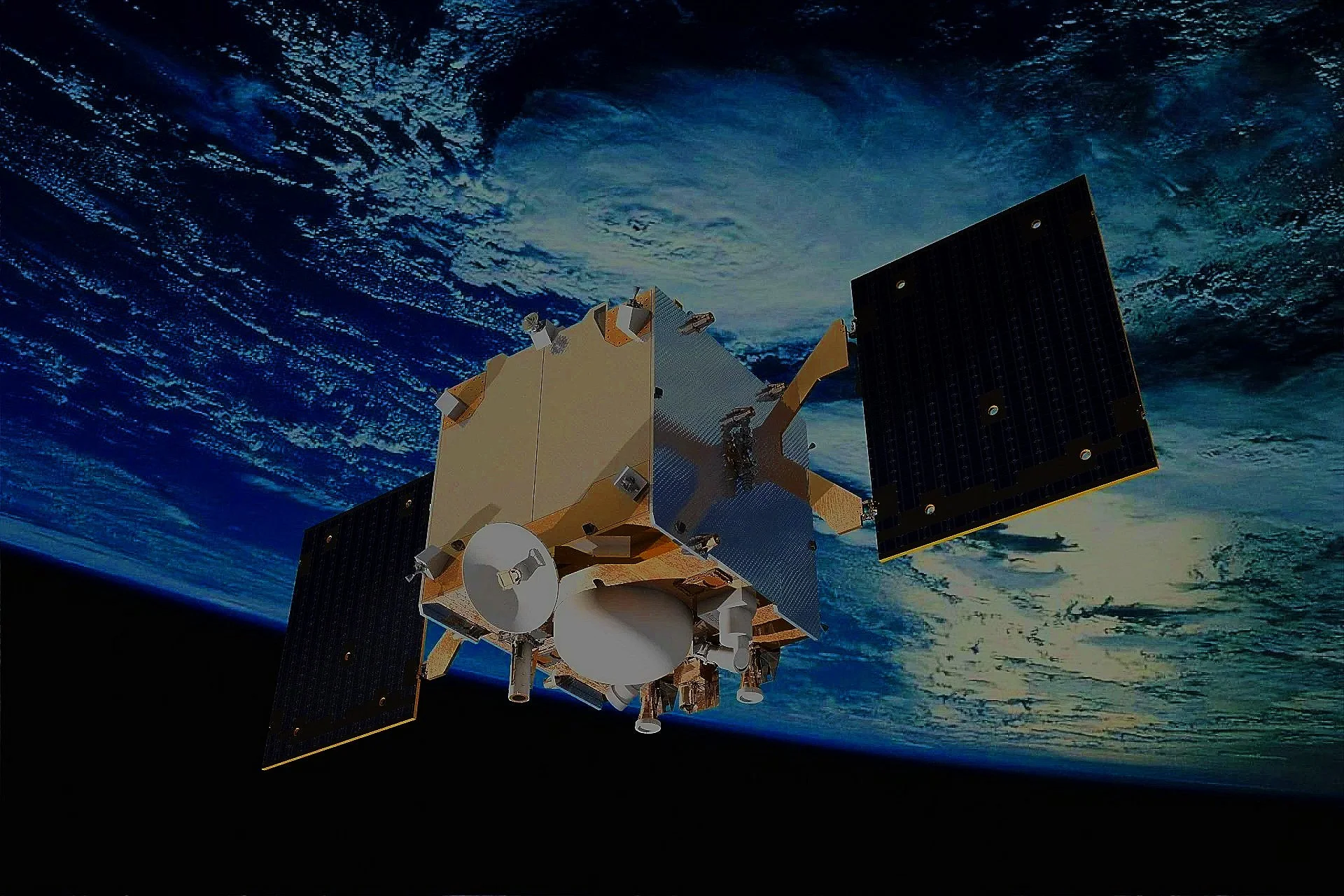
Artist image of RAMSES (©ESA)
Launch Date
April - May 2028
RAMSES (Rapid Apophis Mission for SpacE Safety) will launch in 2028, with a window running from 24 April to 11 May.
RAMSES spacecraft will rendezvous with Apophis before it passes Earth and accompany the asteroid during the flyby to observe how it is warped and changed by our planet’s gravity.
Following a 10-months direct transfer, Ramses will rendezvous with Apophis no later than March 1st, 2029, and will perform a detailed characterization campaign of the asteroid.
At the closest distance, global imaging at 10 cm resolution will be achieved exploiting the Apophis rotation and selected local areas will be imaged at a resolution of 1.5 cm. This series of observations will be performed both before and after the close encounter with Earth.
In addition, during the close encounter, characterization of Apophis with high temporal resolution (1 picture per minute) will be performed in a safe hovering position at 5 km to observe in detail the abovementioned physical and dynamical alterations of the asteroid.
RAMSES relies on an adaptation of the Hera spacecraft design, to fit to the updated mission profile, while minimizing any new developments given the short timescale until launch.
RAMSES
Spacecraft
Ramses Mothercraft Instruments
Tyvak International Cubesat
Emxys Cubesat
The RAMSES spacecraft will perform high-resolution mapping of Apophis in order to build detailed maps of its surface and interior structure before the closest passage of the asteroid to Earth, during it and after it. RAMSES will provide crucial measurements of the response of an asteroid to Earth’s tidal forces.
RAMSES will reach Apophis weeks before it closest moment aside Earth, on Friday, April,13th, 2029. It will then make History, as such a close passage happens on average only once every 7 centuries.
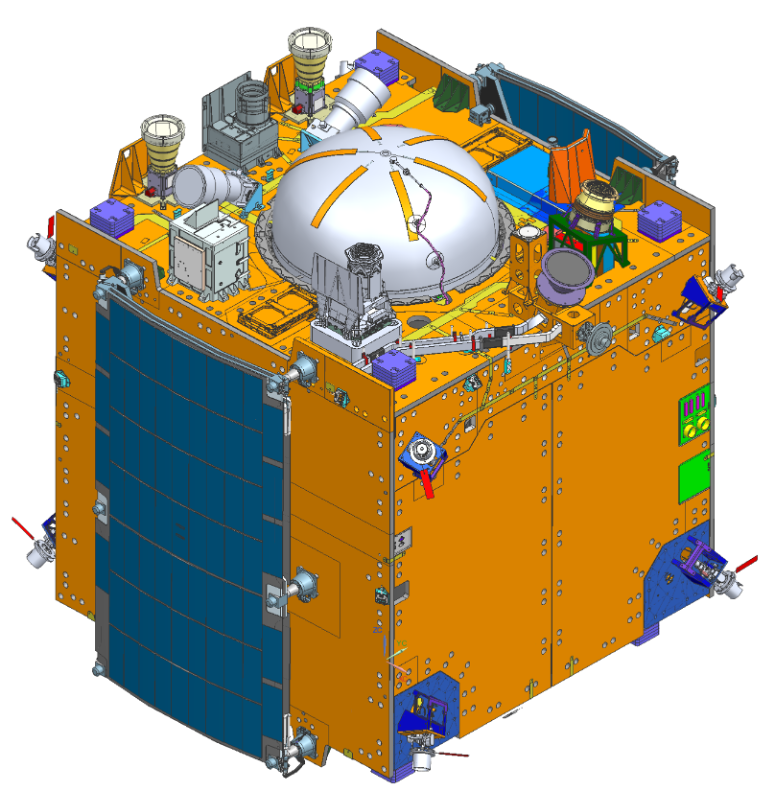

RAMSES is largely based on the Hera design. The key design drivers with respect to the original mission profile are: a much reduced distance from the Sun (allowing smaller Solar Arrays and reduced heater power), a closer distance from the Earth during critical operations (allowing a smaller antenna), but an increased delta-V demand (introducing the need for larger tanks and/or lower dry mass).
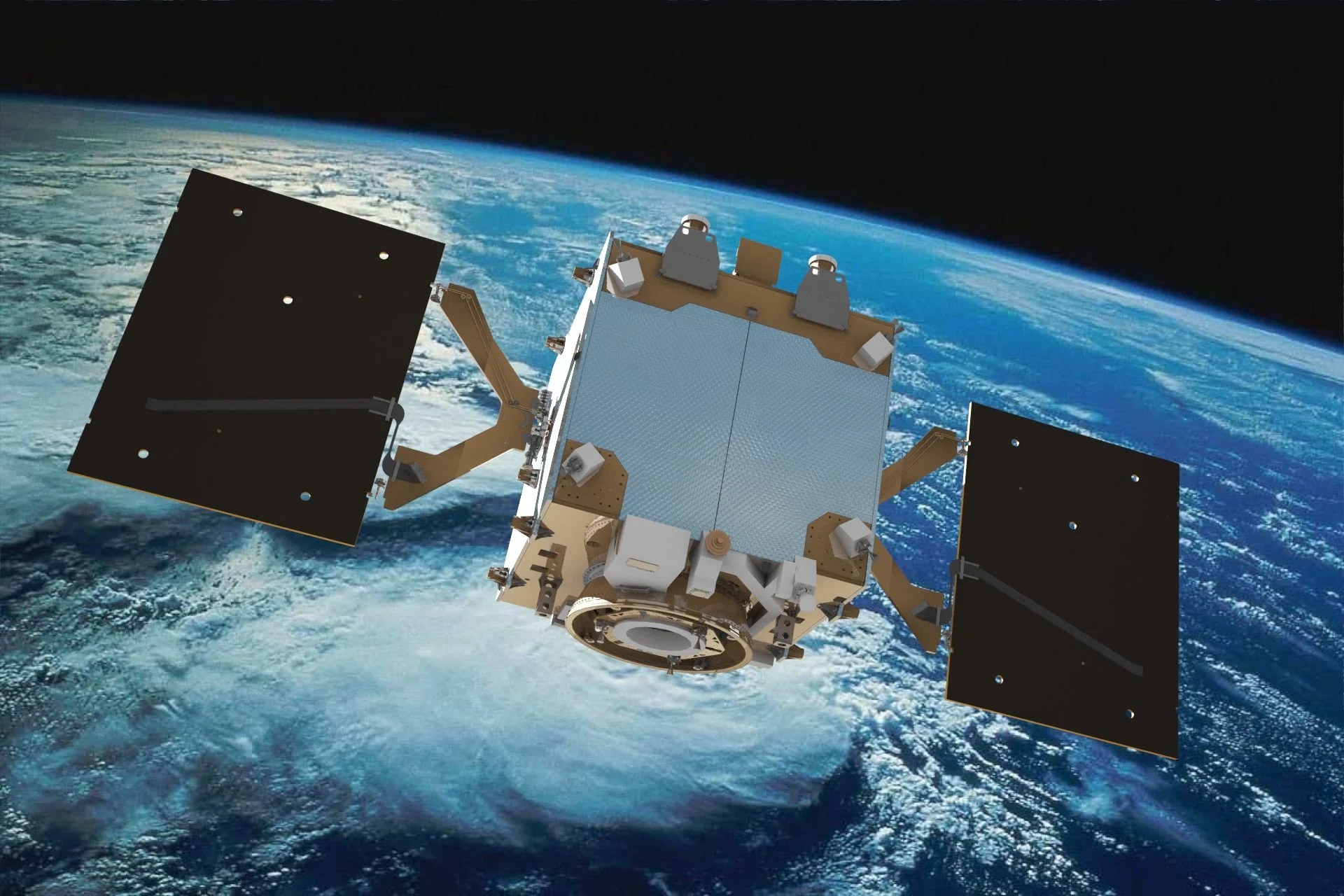
Spacecraft design - industrial consortium under the lead of OHB Italy (©)
To rendezvous with the asteroid before April 2029, the RAMSES spacecraft needs to launch in 2028 with a 3-weeks launch window opening on April 20th. Following a 10-months direct transfer, RAMSES will rendezvous with Apophis no later than March 1 st, 2029, and will perform a detailed characterization campaign of the asteroid.
At the closest distance, global imaging at 10 cm resolution (localy at 1.5 cm resolution) will be achieved. This series of observations will be performed both before and after the close encounter with Earth.
In addition, during the close encounter, characterization of Apophis with high temporal resolution (1 picture per minute) will be performed in a safe hovering position at 5km to observe in detail the abovementioned physical and dynamical alterations of the asteroid.

Apophis will safely pass the Earth on 13 April 2029.